
5 Ways To Prepare Your School for a Mobile-Free September: A Practical Implementation Guide
With new government guidance encouraging schools to become “mobile phone-free environments by default,” many school leaders are now planning how to implement policies ahead of the September 2026 school year.
So how can schools prepare effectively?
Start With a Clear Policy
The Department for Education recommends that schools create a policy which is:
- Simple
- Consistent
- Easy to understand
- Clearly communicated
Schools should decide:
- Whether phones are completely prohibited or securely stored
- How phones will be managed during the day
- What sanctions will apply
- How exceptions will be handled
The guidance also recommends ensuring policies align with:
- Behaviour policies
- Safeguarding procedures
- SEND and medical needs policies
You can read the full government guidance here:
DfE Mobile Phones in Schools Guidance
Communicate Early With Parents
One of the strongest themes across the government case studies was the importance of parent and family buy-in.
Schools that successfully introduced stronger mobile phone restrictions focused heavily on:
- Explaining the reasons behind the policy
- Addressing safety concerns
- Building trust
- Communicating consistently
Many parents support mobile-free school environments when they understand the goals around:
- Learning
- Mental wellbeing
- Online safety
- Reducing distraction
Schools should also reassure families that pupils can still:
- Travel safely
- Contact parents through school offices if needed
- Access devices where reasonable adjustments apply
Decide on a Practical Storage Solution
Operational consistency is essential.
Schools now need solutions that are:
- Scalable
- Secure
- Easy for staff to manage
- Low-disruption
- Suitable for large pupil numbers
Government case studies showed schools successfully using:
- Lockers
- Hand-in systems
- Collection points
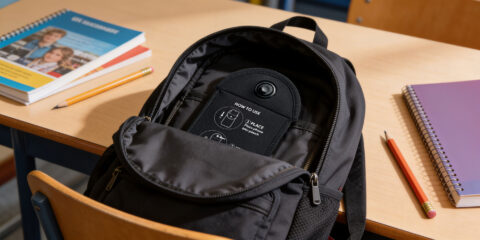
- Mobile phone pouches
For many schools, pouch systems are becoming increasingly attractive because they:
- Keep devices safely with pupils
- Reduce safeguarding concerns
- Minimise daily admin
- Reduce temptation during the school day
Train Staff and Ensure Consistency
Even the best policy will struggle if enforcement varies between classrooms or year groups.
The most successful schools featured in the guidance focused heavily on:
- Consistent expectations
- Clear sanctions
- Staff modelling behaviour
- Strong routines
The guidance also recommends that staff avoid personal phone use in front of pupils wherever possible.
Consider SEND and Medical Adjustments
Schools must also ensure their policy remains flexible where needed.
The guidance makes clear that reasonable adjustments may be necessary for pupils with:
- Medical conditions
- Disabilities
- Specific safeguarding needs
Examples include:
- Diabetes monitoring devices
- Communication support
- Individual education healthcare plans
Policies should clearly outline how exceptions are managed fairly and safely.
Creating a Culture, Not Just a Rule
The schools highlighted in the government guidance consistently described mobile-free environments as part of a wider school culture, not simply a behaviour rule.
The focus was on creating:
- Attentive classrooms
- Better concentration
- Improved social interaction
- Reduced anxiety
- More focused learning environments
As more schools prepare for September 2026, practical implementation will become increasingly important.
Supporting Schools With RHINO Phone Pouch
To help schools prepare for mobile-free environments, we’ll soon be launching RHINO Phone Pouch, our new mobile-free learning solution to support education settings.
RHINO Phone Pouch has been developed to support:
- Consistent implementation
- Reduced classroom disruption
- Safer phone storage
- Simple daily routines
Launching ahead of the new academic year, RHINO Phone Pouch is designed to help schools introduce mobile phone policies with confidence.
 Other News