
How to Choose the Right Exercise Book Ruling for Every Subject
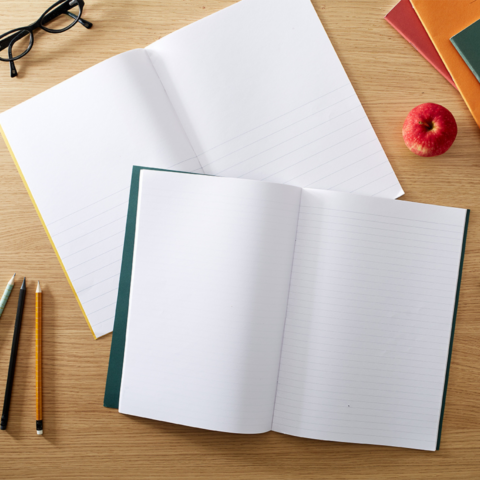
If you’ve ever stood in a stock cupboard trying to remember whether Year 3 need 12mm lines or 10mm, you’re not alone. Exercise book ruling is one of the most searched questions and queries when it comes to school stationery.
It matters more than many people realise, as the right ruling supports handwriting development, maths accuracy, neat presentation and effective marking, as well as the wrong ruling can hold pupils back!
Our RHINO guide explains the most common exercise book rulings used in UK schools, why they exist, and how to choose the right one for each subject and key stage.
Lined Exercise Books | The Classroom Staple
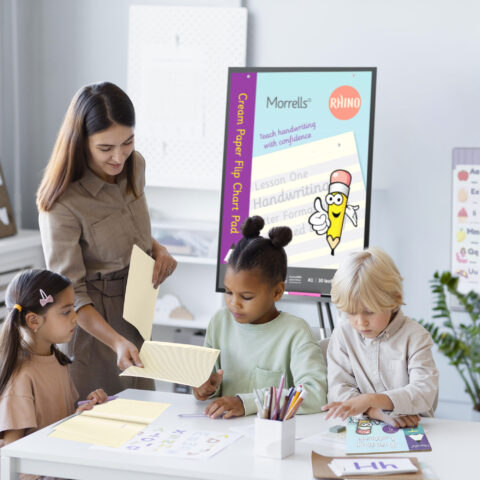
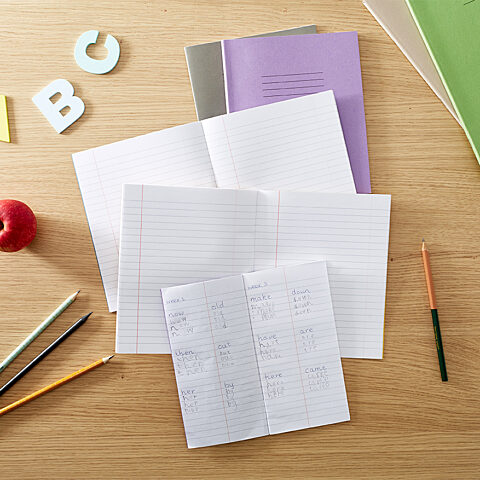
Lined exercise books are the most widely used ruling in UK schools. They are designed to support handwriting, spelling, sentence structure and extended writing, with different line spacings tailored to pupils’ developmental stages.
From early handwriting practice to GCSE essays, lined books form the backbone of classroom learning. Available in a wide range of line spacings, they can be matched precisely to pupils’ needs, helping improve consistency, letter formation and presentation.
Why would I use a lined exercise book?
Lined exercise books are familiar, versatile and easy for pupils to use confidently. They help children learn where letters sit, how tall ascenders should be, and how to keep writing neat and evenly spaced.
In primary school, wider lines support early writers who are still developing motor control. As pupils progress, narrower rulings encourage tighter, more fluent handwriting and prepare them for exam conditions.
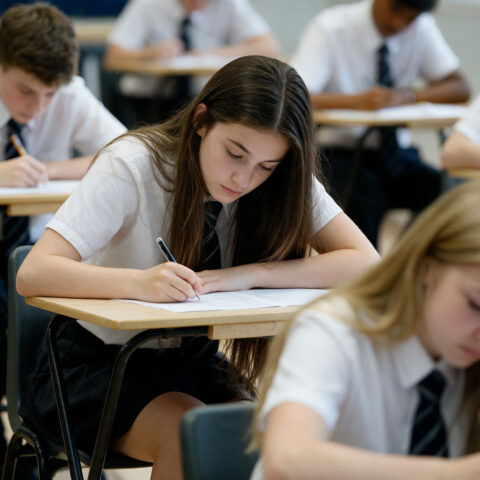
By secondary school, lined books are used across most subjects, often with specific rulings chosen to suit extended writing and teacher feedback.
When and what are lined rulings used for:
- Early writers in EYFS and KS1
- Handwriting practice
- Pupils still mastering letter formation
- Upper KS1 and lower KS2
- Developing handwriting stamina
- Short paragraphs and structured writing
- Upper KS2, KS3 and beyond
- Extended writing
- Exam-style responses
Why teachers choose lined books:
- Support clear handwriting progression
- Make marking quicker and more consistent
- Encourage pupils to take pride in presentation
Squared Exercise Books | For Maths and Science
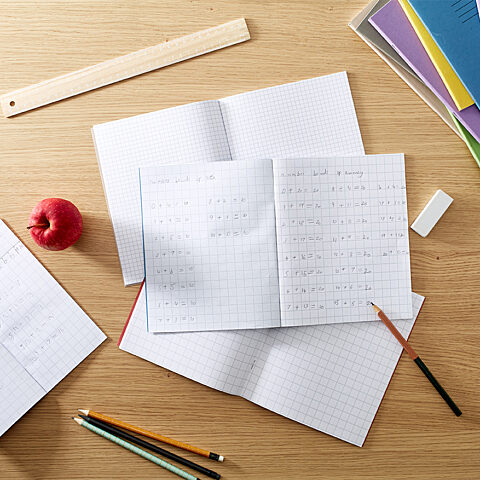
Squared exercise books are designed to bring structure and accuracy to numerical work. The grids help pupils align numbers correctly, draw graphs accurately, and organise calculations logically. They are essential in maths and increasingly popular in science subjects that involve data, tables and diagrams.
Why would I use a squared exercise book?
Squared rulings reduce common maths errors such as misaligned digits and uneven columns. They also make it easier for teachers to spot mistakes quickly when marking.
In younger year groups, larger squares help pupils understand place value and spatial relationships. As confidence grows, smaller squares allow for more complex calculations and compact working.
When and what are squared rulings used for:
- KS1 maths
- Early number work
- Shape, space and measure
- KS2 maths
- Column methods
- Simple graphs and tables
- KS3 and KS4 maths
- Algebra, geometry and data handling
- Physics and chemistry calculations
What are the benefits of squared books in the classroom?
- Improves accuracy and layout
- Encourages logical problem-solving
- Creates clear evidence of mathematical thinking
Blank Exercise Books | For Creativity and Visual Thinking
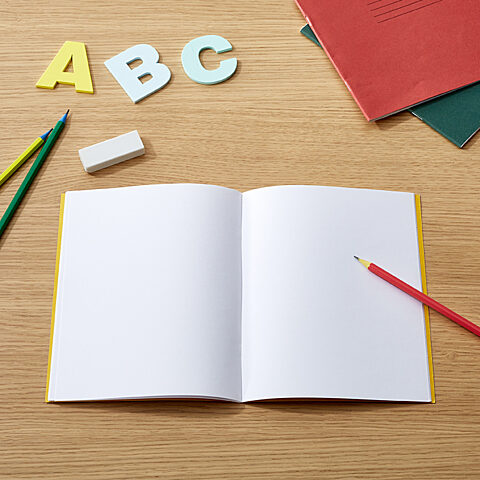
Plain exercise books remove structural boundaries entirely, giving pupils the freedom to draw, sketch, annotate and design without restriction, they are most commonly used in creative subjects, but also play an important role in concept mapping and visual learning across the curriculum.
Why would I use a blank exercise book?
Plain pages encourage creativity and experimentation, as pupils aren’t constrained by lines or grids, making them ideal for expressive work, diagrams and non-linear thinking.
They are particularly valuable in subjects where ideas are best communicated visually rather than through extended text.
When would I use a plain blank exercise book:
- Art and design
- Design & Technology
- Mind maps and brainstorming
- Science diagrams
- Early mark-making in EYFS
Why teachers use plain blank books?
- Encourage originality and confidence
- Support alternative learning styles
- Ideal for mixed-media work
Alternate Rulings
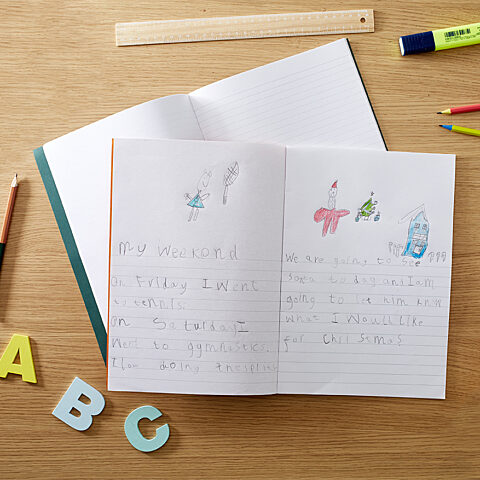
Some subjects, and some pupils benefit from a combination of rulings within the same book, these specialist formats provide structure where needed, without limiting flexibility.
Plain and lined - top plain, bottom lined
- KS1 literacy
- Sentence writing with illustrations
- Story sequencing
Alternate plain and lined pages
Project-based learning
Humanities
Research and presentation work
Music ruling
Composition
- Notation practice
Why do alternate and combination rulings work?
They support differentiated learning and allow pupils to demonstrate understanding in multiple ways, both visually and in writing.
A Quick Ruling Comparison
Ruling Type | Best For | Key Stages |
Wide lined (12–15mm) | Early handwriting | EYFS, KS1 |
Narrow lined (8–10mm) | Extended writing | KS2–KS4 |
Squared (5–10mm) | Maths & science | KS1–KS4 |
Plain | Art & diagrams | All |
Combination | Literacy & projects | KS1–KS3 |
How to Choose the Right Ruling for Your School
Choosing the right ruling can benefit your schools' and pupils' progress, confidence and workload.
EYFS & KS1: Wide lined, plain, and combination rulings
KS2: Transition from 10mm to 8mm lined; 10mm squared for maths
KS3 & KS4: 8mm lined for most subjects; 5mm squared for maths and science
Art & DT: Plain throughout
Intervention & focus work: Smaller or specialist rulings where appropriate
When rulings are consistent across classes and year groups, pupils develop stronger habits and teachers spend less time correcting presentation.
Whether you’re supporting early handwriting or exam-ready work, choosing the right exercise book ruling helps every pupil work more confidently, and more neatly...all year long!
If you enjoyed the article and want more content like this here’s what you can do:
- Subscribe to The Victor Stationery LinkedIn Newsletter to get notified when a new article is released comes out.
- Subscribe to our RHINO Stationery Email Marketing Newsletter, where we bring you all the latest on educational insights, product updates and share tips on the latest stationery trends that are shaping work and learning spaces.
- You can also connect with us on our RHINO Stationery socials - Facebook, Instagram, TikTok, LinkedIn, or X
- Give us a follow 🤲 and tag @RHINOStationery for a chance to be featured! #BuyingRhinoSavesRhinos
Our Newsletter is your go-to hub for:
👉 The latest stationery trends that are shaping work and learning spaces
👉 Educational insights to support focus and creativity
👉 Exclusive first looks at our newest product launches
If you’re passionate about educational stationery, children's mental health and sustainable practices, this one’s for you.
🔗 Subscribe now and never miss a page-turning update!
 Other News